Pet care · Product Design · 2023
Paw Rangers.
Leave the pet, keep the peace of mind.
A concept app that helps pet parents find a caretaker they can trust, and gives the caretaker company and an income.
- My role
- UX research and design: survey, competitor review, synthesis, personas, journeys, card sort, IA and brand
- Duration
- Published on Behance, 20 Jan 2023
- Industry
- Pet care
- Platform
- Mobile app (concept)
- Tools
- Figma · Illustrator · Photoshop
Overview
The product, plainly
- What it is
- Paw Rangers is a mobile app concept that matches pet owners with caretakers nearby. Owners find, chat with and hand their pet to a verified caretaker, and get regular updates while they are away. Caretakers find pets to look after, for company and for income.
- Why it exists
- After lockdown, people went back to work, and pets that had got used to company were left alone. The survey showed the problem isn’t availability. People don’t trust strangers with their pets.
- Who it serves
- Pet owners who travel or work long days, and people with free time who would look after a pet: students, older adults and people looking for company or a fresh start.
- The problem
- Finding a pet sitter depends on word of mouth, and the existing apps rarely offer sitting with chat. Fake profiles, harassment, theft and unanswered messages make both sides cautious.
- My contribution
- The survey and its analysis, the competitor review, the affinity map, four personas with empathy maps, two journey maps, the card sort, the user flow, the information architecture, and the brand: badge, illustration, palette and attributes.
14
survey questions
6
competitor apps compared on 15 features
4
personas with empathy maps
50%
disagreed that it is easy to find a caretaker (survey)
Stage 1 of 5 · Empathise
Who gets left at home
Research and discovery
Paw Rangers started with one change after lockdown. People went back to the office, and pets that had got used to company were alone again. I ran a 14-question survey, reviewed six pet-care apps and wrote four personas: two pet owners and two people who might look after a pet. This stage shows what that research found and where it was thin.
What kind of evidence is in this stage
- Research conducted
- Competitive observation
- Provisional persona
50%
disagreed that it is easy for an owner to find a caretaker
Source: Survey
60%
agreed a good caretaker is an option while they are away
Source: Survey
46%
rated their trust in a caretaker 0–2 out of 5
Source: Survey
50%
would not want to look after someone else’s pet
Source: Survey
How people answered
Conceptual diagram- Strongly disagree
- Disagree
- Neutral
- Agree
- Strongly agree
How much they trust a caretaker
Conceptual diagram- 0
- 1
- 2
- 3
- 4
- 5
Who answered
Conceptual diagram- Working
- Student
What else people wanted in the app, most requested first. The survey’s bar chart has no values, so this is a ranking only:
1. Doctor’s appointments, by a wide margin 2. Food preferences 3. Voice and video calls (close to food preferences) 4. Pet tracking
What the six apps offer
Conceptual diagram| Pet Backer | Sploot | Zoonivet | Hoofzy | Pawshake | Pet Perfect | |
|---|---|---|---|---|---|---|
| Pet sitting | — | — | — | — | ||
| Pet walking | — | — | — | — | ||
| Day care | — | — | — | — | ||
| Boarding centres | — | — | — | — | ||
| Doctor’s appointment | — | — | — | — | ||
| Chat | — | |||||
| Activity reminders | — | — | ||||
| Pet training | — | |||||
| Adoption | — | — | — | — | ||
| Experts’ opinion | — | — | — | — | ||
| Social media | — | — | ||||
| Photography | — | — | — | — | — | |
| Blogs | — | — | — | — | ||
| Web app | ||||||
| Available in India | — |
- Offered
- Partly offered
- Planned
Arivazhagi
Pet owner · Quality analyst, 25, Coimbatore
She has two dogs. Her mother looks after them during the week, and when Arivazhagi travels with her family at weekends the dogs stay home alone. Her motivations are recommendations, the pets’ loneliness, the burden of arranging care, and proper care.
Wants
- Find a trained caretaker who makes her dogs comfortable
- Know the dogs are fed on time
- Get videos while she is away
Struggles with
- Fake profiles, harassment and theft
- Caretakers who reply late or not at all
- Not knowing what a user really intends
Morahar Reddy
Pet owner · Entrepreneur, 45, Hyderabad
He lives alone with his dog, which goes everywhere with him. He is an introvert and believes no one can care for his dog as well as he does. He would trust a caretaker only if he could see their skills.
Wants
- Proof that the caretaker is trained
- A more productive day without bringing the dog along
- Know whether the dog is comfortable
Struggles with
- Fear that the caretaker might abuse the pet
- Doubts that the app is any use to him
- Fake profiles
Harman Kaur
Caretaker · Farmer, 64, Mohali
She lost her husband and her dog in an accident, and she is under financial stress. She trained her own dog for years. Looking after a neighbour’s pet would give her company and an income.
Wants
- Find a genuine pet owner
- Stay in touch with the owner
- Earn enough for daily needs
Struggles with
- Fear of being scammed
- Owners who don’t reply
- Not finding the right pet
David Scotch
Caretaker · Unemployed singer, 35, Kozhikode
He is rebuilding his life after a divorce and three years of heavy drinking. A friend suggested he look after other people’s pets. It has given him purpose and some income, and he now wants to open a pet farm.
Wants
- Build trust with pet owners
- A companion and a steady income
- Be seen as helpful again
Struggles with
- Staying sober while on duty
- Owners who reply late
- Being alone
Key insights
- 01Half the respondents disagreed that a pet owner can easily find a caretaker (30% strongly disagree, 20% disagree). (Survey; sample size not shown on the board.)
- 02Trust is the gap. Asked to rate their trust in a caretaker from 0 to 5, 46% answered 0–2 and only 24% answered 4–5. Even so, 60% agreed that a good caretaker would be an option. (Survey.)
- 03Of the six apps reviewed, only two offer pet sitting, and one of those, Pawshake, also offers chat. (Competitive review, board 03.)
- 04When asked what else the app should do, respondents chose doctor’s appointments most often, ahead of food preferences, voice or video calls and pet tracking. (Survey; the chart shows ranking, not counts.)
Decisions made
- 01Design for two sides from the start. A caretaker needs a reason to join, so the app has to work for them as well as for the pet owner.
- 02Make trust the core of the product rather than a feature: verification, safe chat and updates while the pet is away.
- 03Put the pet’s health and food in the product brief, because respondents asked for those first.
The survey said people want a caretaker but don’t trust one. The next step was to sort what they said into problems the design could solve.
Next: DefineStage 2 of 5 · Define
Trust has to come first
Problem framing and strategy
I put every pain point, need and remark from the research on an affinity map. Six groups emerged. The largest, challenges and pain points, came down to one fear: the other person might not be who they say they are. The two journey maps showed where in the experience that fear strikes hardest.
The problem, in one sentence. Help a pet owner leave their pet with someone nearby they can trust, and give that person a safe and rewarding reason to say yes.
The affinity map
Conceptual diagramThe pet owner’s journey
Conceptual diagram- Has to leave the pet alone or take it everywhere
- Thinks of finding a caretaker
- Takes suggestions from friends
- Searches online
- Reads reviews
- Explores apps and caretaker profiles
- Starts a conversation
- Caretaker accepts
- Leaves the pet
- Misses the pet
- Gets updates on feeding and videos
- Gets the pet back and pays
- Writes a review
- “Can I trust a caretaker?”
- “Can I find a good caretaker for my dog?”
- “Are there any online services?”
- “Can I trust this app?”
- “Can I install it just to explore?”
- “Why is it asking me to sign in?”
- “This person can look after my dog.”
- “Do I have to leave my pet at their place?”
- “Can I keep in touch with the caretaker?”
- “Are my chats safe?”
- “That went well.”
- Activity reminders
- Customised recommendations, not clutter
- Say why sign-in is needed; a short profile
- More options, and free pet taxis
- End-to-end encryption and reply reminders
- Reviews that the next owner can trust
The caretaker’s journey
Conceptual diagram- Thinks of having a pet as a companion
- Confused by different suggestions
- Searches the internet
- Finds apps and reads reviews
- Finds a suitable app
- Looks through pet owners’ profiles
- Contacts the owner
- Owner agrees to leave the pet
- Sends videos of the pet to the owner
- Finds happiness in the pet’s company
- Returns the pet
- Writes a review of the pet
- “Can I look after a pet as a companion?”
- “Is there an app that helps me find a pet?”
- “Why is it asking me to sign in?”
- “Maybe this dog can help me get over heartbreak.”
- “Do I have to pick the pet up?”
- “I want to keep the owner updated.”
- “Grateful the owner trusted me.”
- Show each pet’s personality, written by its owner
- Clear, guided navigation
- A simple profile creation process
- Free pet taxis
- Encrypted chat and reply reminders
Key insights
- 01Fake profiles appear in almost every source: the affinity map, all four personas’ pains and both journeys. (Affinity map and personas.)
- 02The lowest point in the pet owner’s journey is not handing the pet over. It comes earlier, while comparing confusing advice and reading reviews. (Journey map, board 09.)
- 03Both sides share one complaint: late replies or no reply. Silence reads as a risk. (Both journey maps.)
- 04The caretaker side is not only about money. Company, recovery and purpose appear as often as income. (Caretaker personas and affinity map.)
Decisions made
- 01Phone number and OTP verification at sign-up, plus photo verification on the profile.
- 02Explain why sign-in is needed before asking for it, and keep profile creation short. Both were pain points.
- 03Make regular updates (food, videos, status) a step in the flow, not an optional extra.
- 04Add reply reminders and end-to-end encrypted chat to answer the silence problem.
The problem was defined. The next step was to build a structure that made two kinds of user, two kinds of search and a shared chat feel like one app.
Next: IdeateStage 3 of 5 · Ideate
Two front doors, one app
Exploration and solution architecture
The structure had to serve two people who want opposite things from the same handover. After signing up, a new user picks Hands or Paws, and the rest of the app follows from that choice. I ran a card sort to group the features, then drew the flow and the full information architecture from it.
What kind of evidence is in this stage
- Retrospective analysis
From sign-up to review
Conceptual diagramThe card sort
Conceptual diagramThe information architecture
Conceptual diagramKey insights
- 01In the user flow, the pet owner’s path goes through Hands to choosing a caretaker, and the caretaker’s path goes through Paws to choosing a pet. Both paths join again at “accepted”. (User flow, board 12.)
- 02Both sides can post an ad, free or featured. A paid featured ad is the app’s only revenue model on the boards. (User flow.)
- 03The card sort produced eight groups. Chat became a top-level section with voice, video, media and a bot that starts conversations. (Card sort, board 11.)
Decisions made
- 01Ask once whether the user is an owner or a caretaker, and let them switch accounts later (Account → Switch account).
- 02Build the home screen around recommendations, search and filters by breed, location and time.
- 03Keep the handover in the app: accept, meet, regular updates, return and payment, then a review.
With the structure in place, the brand had to feel friendly and calm enough for people to hand over a pet.
Next: DesignStage 4 of 5 · Design
A shield, a walk, warm orange
Wireframes, UI and prototyping
The brand began as a list of words in five groups: culture, customer, voice, benefit and value. Each group had one word that mattered most: positivity, social, gratitude, hope and perception. The result is a shield-shaped badge in warm orange and teal, and an illustration of a woman walking three dogs, which shows the service without explaining it.
What kind of evidence is in this stage
- Retrospective analysis
The palette
Conceptual diagramStencil display (name not recorded) · Wordmark only
PAW RANGERS
Brand attributes
Conceptual diagramCulture
- Positivity
- Friendly
- Discipline
- Hospitality
- Diversity
Customer
- Social
- Fascination
- Exploration
- Fun
- Lovable
Voice
- Gratitude
- Change
- Harmony
- Satisfaction
- Knowledge
Benefit
- Hope
- Personal development
- Connections
- Happiness
- Distraction from heartbreak
Value
- Perception
- Enthusiasm
- Quality
- Calmness
- Integrity
Key insights
- 01The badge is shaped like a shield and the name says Rangers: protection, delivered in a friendly tone. (Logo on the Behance boards.)
- 02The palette pairs a warm, approachable orange with a calm teal. Each colour carries one of the brand’s two jobs, friendliness and trust.
- 03The published case study ends at the IA. The process diagram lists wireframes, hi-fi designs and a prototype, but none of these are on the boards.
Decisions made
- 01Use orange for the badge and warm moments, and teal for the wordmark and the process. The paw prints are dark brown.
- 02Draw illustrations instead of using photographs of pets, so the brand stays friendly without showing anyone’s real animal.
- 03Use the brand words as a test for copy: positive, grateful, hopeful, never alarming, even about safety.
That leaves the honest end of the story: what was tested, and what would be needed to show it works.
Next: TestStage 5 of 5 · Test
What was tested, and what was not
Validation, iteration and improvement
The process diagram ends with testing: feedback, a conclusion and a phase two. None of these were published. The survey is the only evidence gathered from people, and it ran before any design existed. This stage separates what is known from what would need to be learned.
What kind of evidence is in this stage
- Provisional persona
- Proposed validation — not yet run
- Future opportunity
14
survey questions
Source: Board 02
6
competitor apps compared on 15 features
Source: Board 03
4
personas with empathy maps
Source: Boards 05–08
0
usability tests published
The process, planned against shown
Conceptual diagram| Planned | Shown | |
|---|---|---|
| Discover: survey and competitor review | ||
| Discover: user interviews | — | |
| Define: affinity map, personas, journeys | ||
| Define: brand attributes | ||
| Ideate: card sort, user flow, IA | ||
| Design: wireframes | — | |
| Design: hi-fi designs and prototype | — | |
| Testing: feedback and conclusion | — | |
| Testing: phase two | — |
- Yes
- Partly
- Planned only
Key insights
- 01There are no usability tests, prototype sessions or launch numbers on the boards. Paw Rangers is a concept.
- 02The survey checked the problem, not the solution. It shows that people want a caretaker and distrust one. It does not show that verification and updates would close that gap.
- 03The riskiest assumption is on the caretaker side: that people like Harman and David would sign up and that owners would accept them.
Decisions made
- 01Publish no outcome numbers, because none exist.
- 02Test the trust signals first (verification badge, reviews, the first update message), before any visual polish.
- 03Treat the phase two on the process diagram as still to come, not as done.
What follows is the plan for finding out.
What I learnedReflection
What I took from it
01
What I learned
Research can make a product bigger instead of clearer. Every note on the affinity map was a real need, so adoption, breeding, a social feed and pet taxis all found a place in the IA. The survey had already named the one job: trust. If I did it again, I would design that job end to end before adding anything else.
I also learned to state the sample size. A doughnut chart without an n looks like evidence, but without the n nobody can judge it.
02
Key design decisions
- Design for two sides: Hands for pet owners, Paws for caretakers.
- Verify at the start: phone and OTP, then photo verification.
- Explain why sign-in is needed, and keep the profile short.
- Make regular updates part of the handover.
- Encrypted chat with reply reminders.
- A friendly shield: warm orange and teal.
03
Product impact
Not measured. Paw Rangers is a concept that was never built or launched. The only data is a survey about the problem, with no sample size published.
04
Opportunities for future development
- Test the trust signals with owners and caretakers (plan under Test).
- Re-run the survey with a stated sample size.
- A narrower phase one: verify, find, chat, hand over, update.
- Vet appointments and food preferences, the features respondents asked for most.
- Add the wireframes and hi-fi screens if the design file still exists.
“Good design isn’t just about creating interfaces. It’s about understanding people, connecting ideas and making complex experiences feel simple.”
Related projects
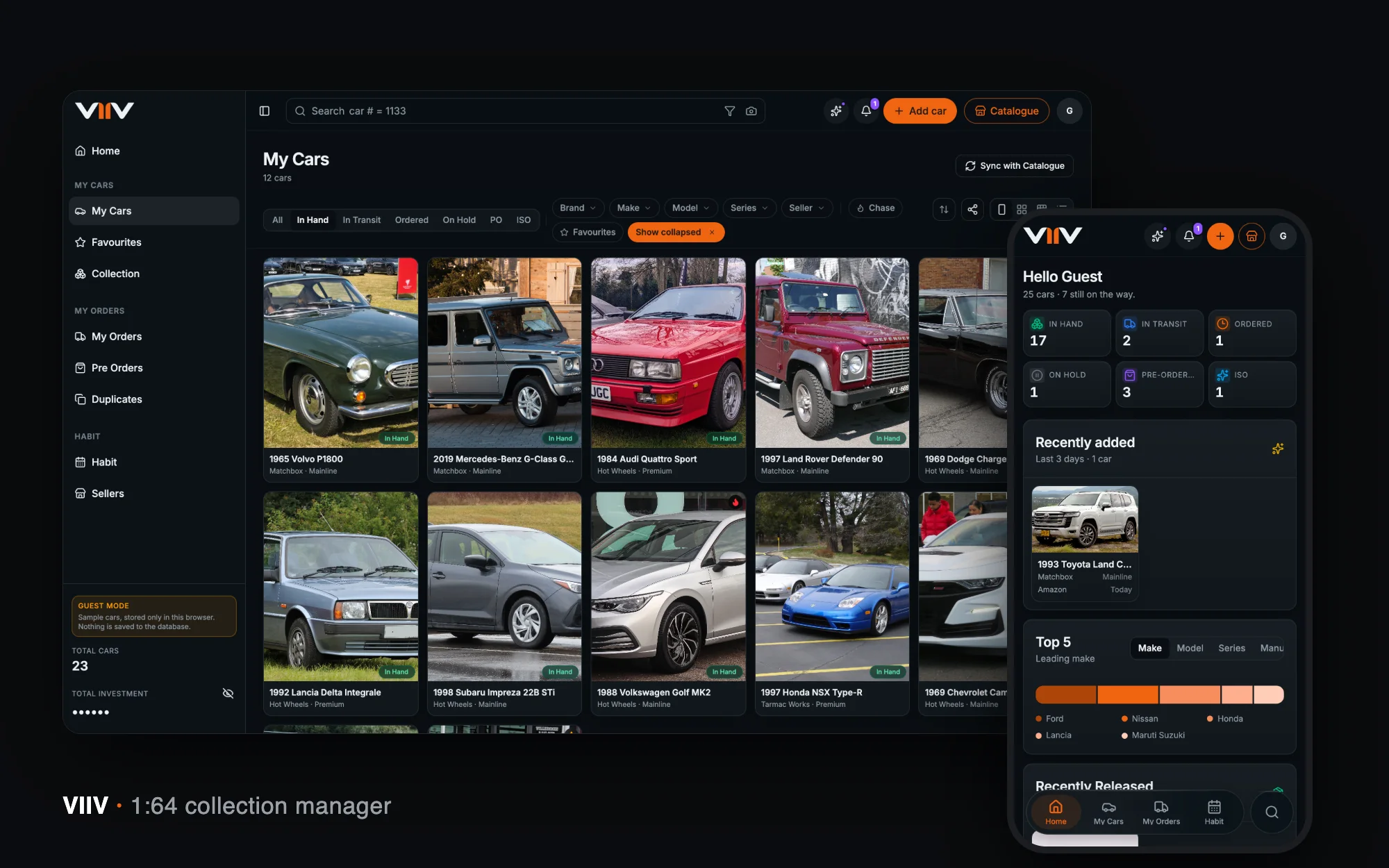
Collectibles · Product Design · 2026
VIIV
A home for a 1:64 diecast collection — catalogue, card scan, orders, spend and habits — designed and built end to end in seven weeks.
View case study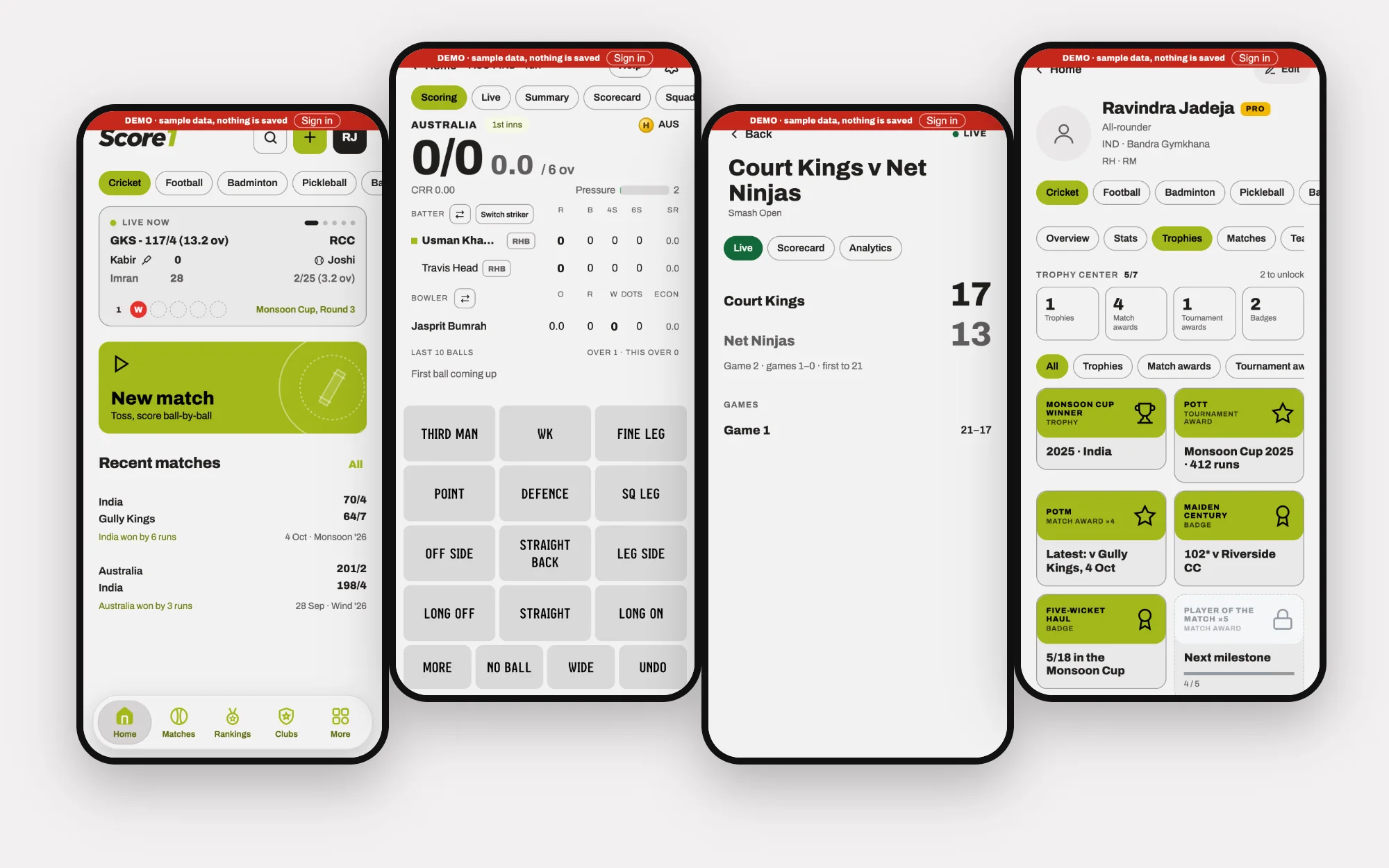
Amateur sport · Product Design · 2026
Score1
One app for scoring, tracking and connecting across nine sports — with the scoring depth cricket needs and the community tools clubs actually use.
View case studyLet’s talk
Have a challenge worth solving?
Whether you’re building a product, transforming an experience or looking for someone to help shape your design direction, let’s talk.